Make the first step smaller than the project
Starting a creative session can feel difficult when the first task is “write the essay,” “finish the illustration,” or “build the object.” A warm-up gives you a smaller first action. It is not a test of talent or a promise that the rest of the session will go smoothly. Its job is to help you handle your materials, notice an idea, and begin making choices.
Choose an exercise you can finish in five to ten minutes. Keep the stakes low: use a scrap page, a separate document, or spare materials rather than the surface intended for your final piece. Before you begin, decide what comes next, such as opening your draft or laying out tools for a project. That way, the warm-up has a clear endpoint instead of becoming another task to perfect.
For writing: follow a detail, then change its shape
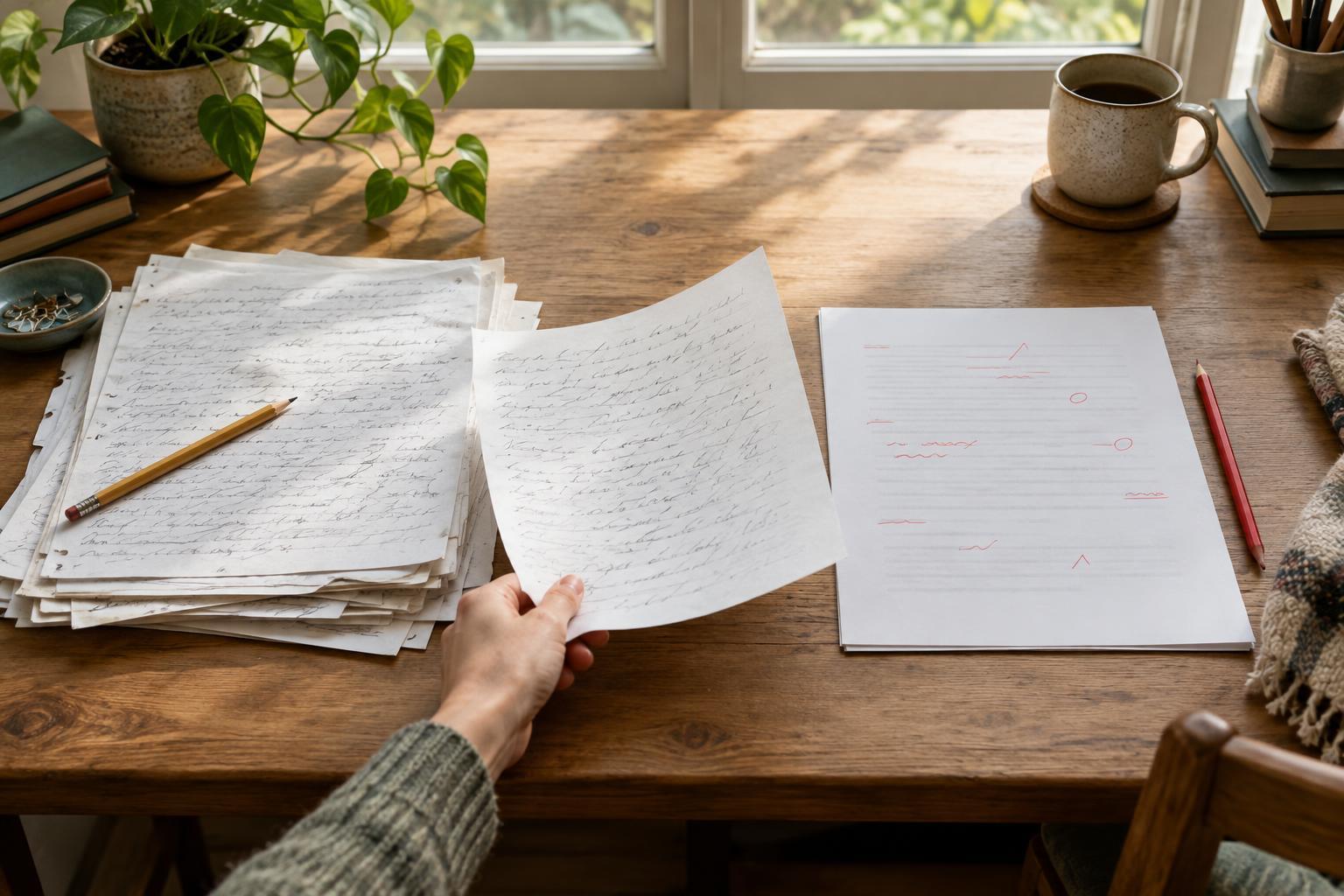
Set a timer for five minutes and describe an ordinary object near you. Start with what you can observe: its texture, weight, color, or position. If you run out of details, write about where it belongs or how someone uses it. Do not stop to improve sentences. The point is to put words on the page and give your attention something specific to follow.
For a second pass, take one sentence and rewrite it three ways: as a short instruction, as a question, and as the opening of a story or explanation. This shift can be useful when you feel locked into one tone. If you are warming up for a particular project, borrow a subject from it rather than inventing a new one. A writer working on a guide, for example, might describe the tool the guide will explain.
For drawing: practice looking without aiming for a finished image
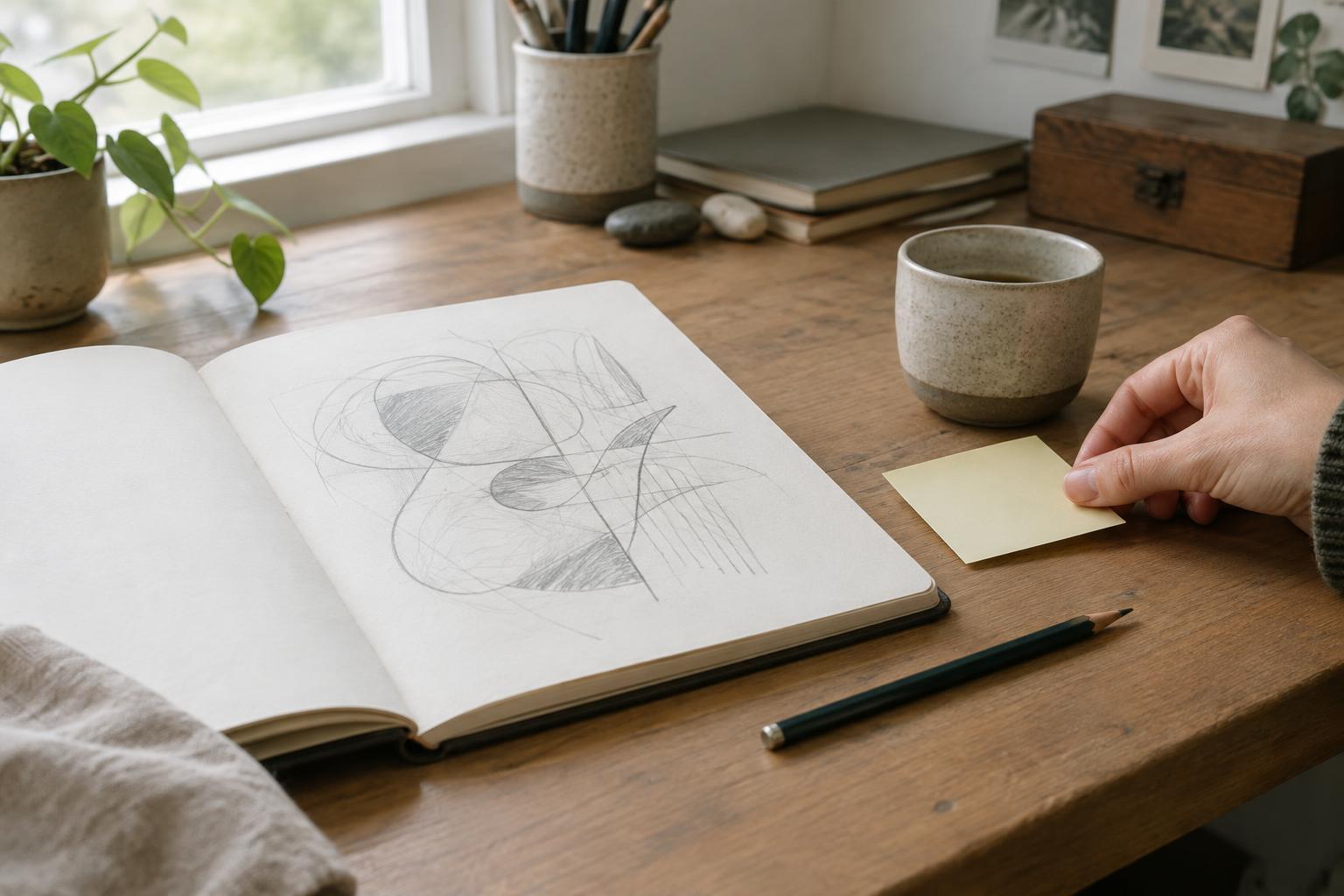
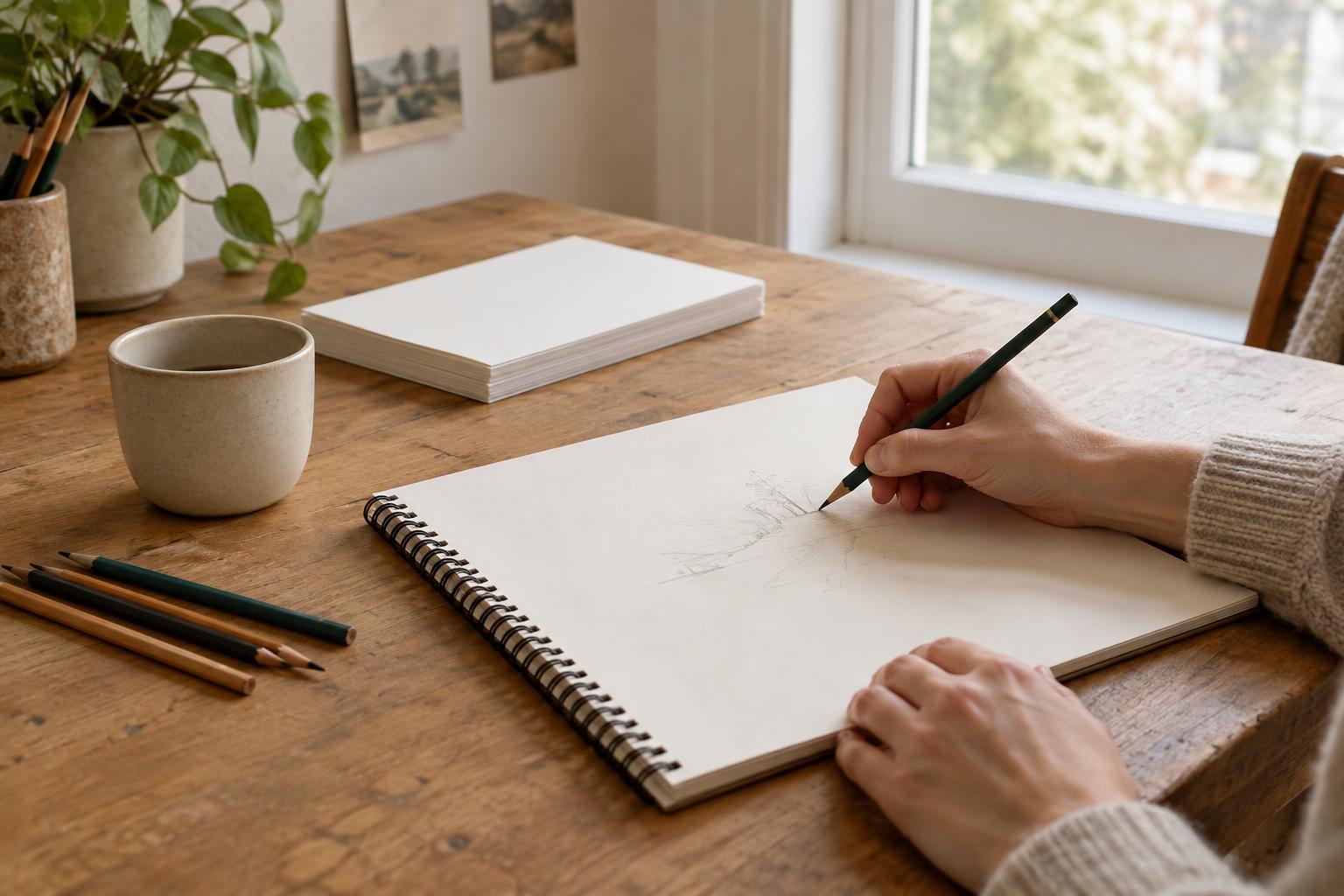
Pick a simple subject, such as your hand, a mug, or a plant. Spend two minutes drawing only its outer edges without erasing. Then make a second sketch using basic shapes to show its structure. Neither sketch needs to be accurate. The first invites close observation; the second asks you to simplify what you see.
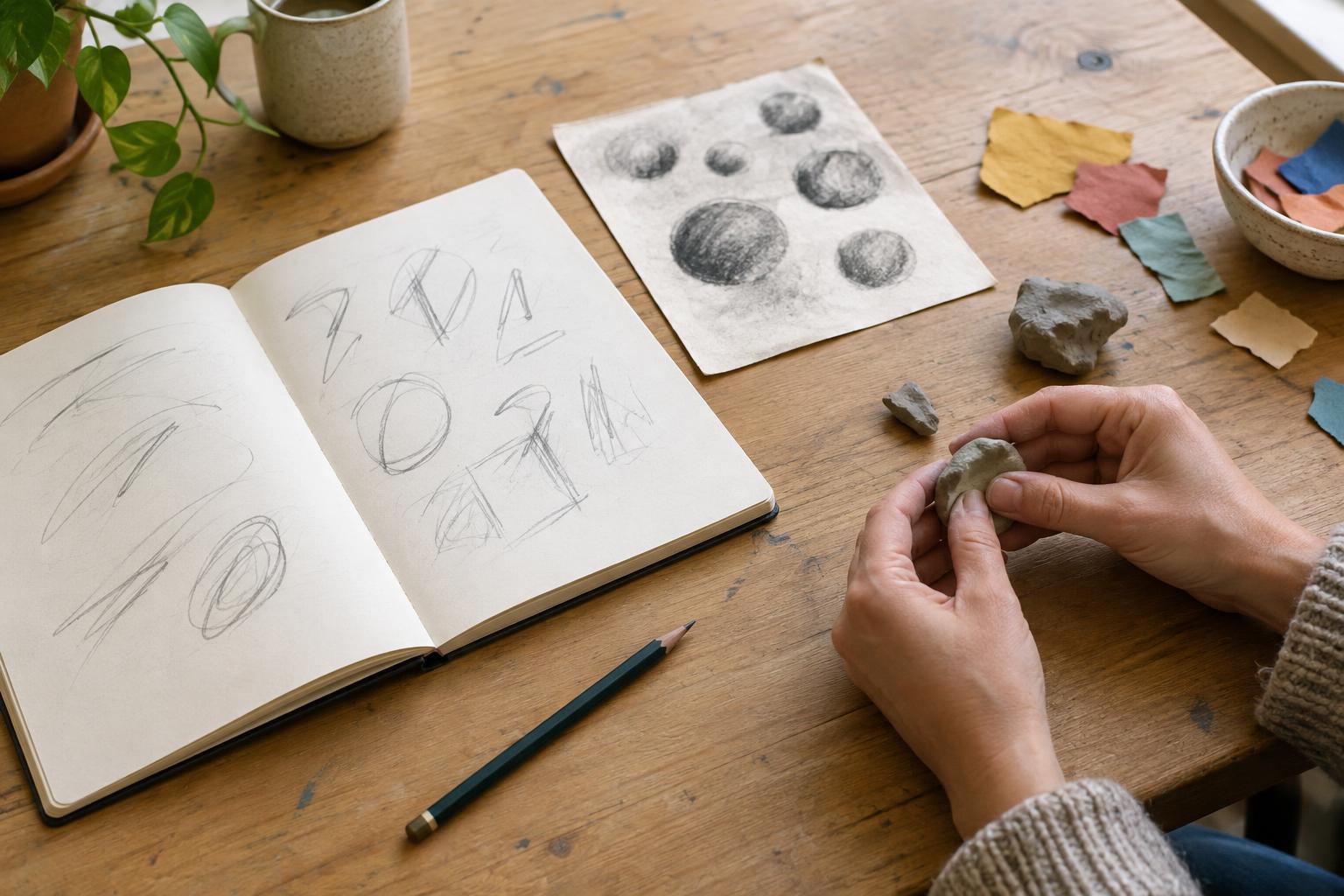
Another option is a page of ten tiny thumbnails. Draw the same subject from different angles, or arrange the same three shapes in different ways. Work quickly enough that no single box feels precious. When the timer ends, circle one feature worth exploring, such as a curve, shadow, or arrangement of space. You can carry that observation into your main drawing without treating the warm-up as a rough draft you must finish.
For making: test a material or a connection
Hands-on projects often ask you to solve practical questions as well as visual ones. Before starting the main piece, use a small offcut or sample to try one move: fold a material, join two parts, mix a little color, arrange a few pieces, or test a tool setting. Choose a test that is safe and appropriate for the materials you already know how to use. You are gathering information, not trying to produce a miniature version of the whole project.
Give the test a narrow question: “Does this fold hold its shape?” or “Which arrangement leaves enough room for the next piece?” Write down or photograph what you learn if you may need it later. If the result is messy, it can still be useful. A sample lets you adjust the next step without asking the main piece to carry every experiment.
End the warm-up and enter the real work
A useful warm-up has a stopping rule. When the timer ends, take one minute to name what you noticed and choose one next action. You might keep a phrase, repeat a promising shape, or change the order of a construction step. You might also keep nothing and simply begin. The exercise has still given you time with the tools and decisions your project requires.
Adjust the routine to the day rather than protecting it as a rigid ritual. On a short day, try one minute of marks or sentences. If you are tired, a gentle review of existing notes may be more fitting than generating something new. If warm-ups regularly consume the time meant for your project, shorten them or skip them. The aim is to create an approachable entrance to creative work while leaving enough time and energy for the work itself.