Make the goal starting, not feeling ready
Waiting for inspiration can make the beginning of a creative session feel like a test. You sit down to write, draw, compose, or design, then check whether you have a good idea and enough energy to do it justice. If the answer is unclear, it becomes tempting to prepare a little longer. Preparation has its place, but you can begin before you feel certain.
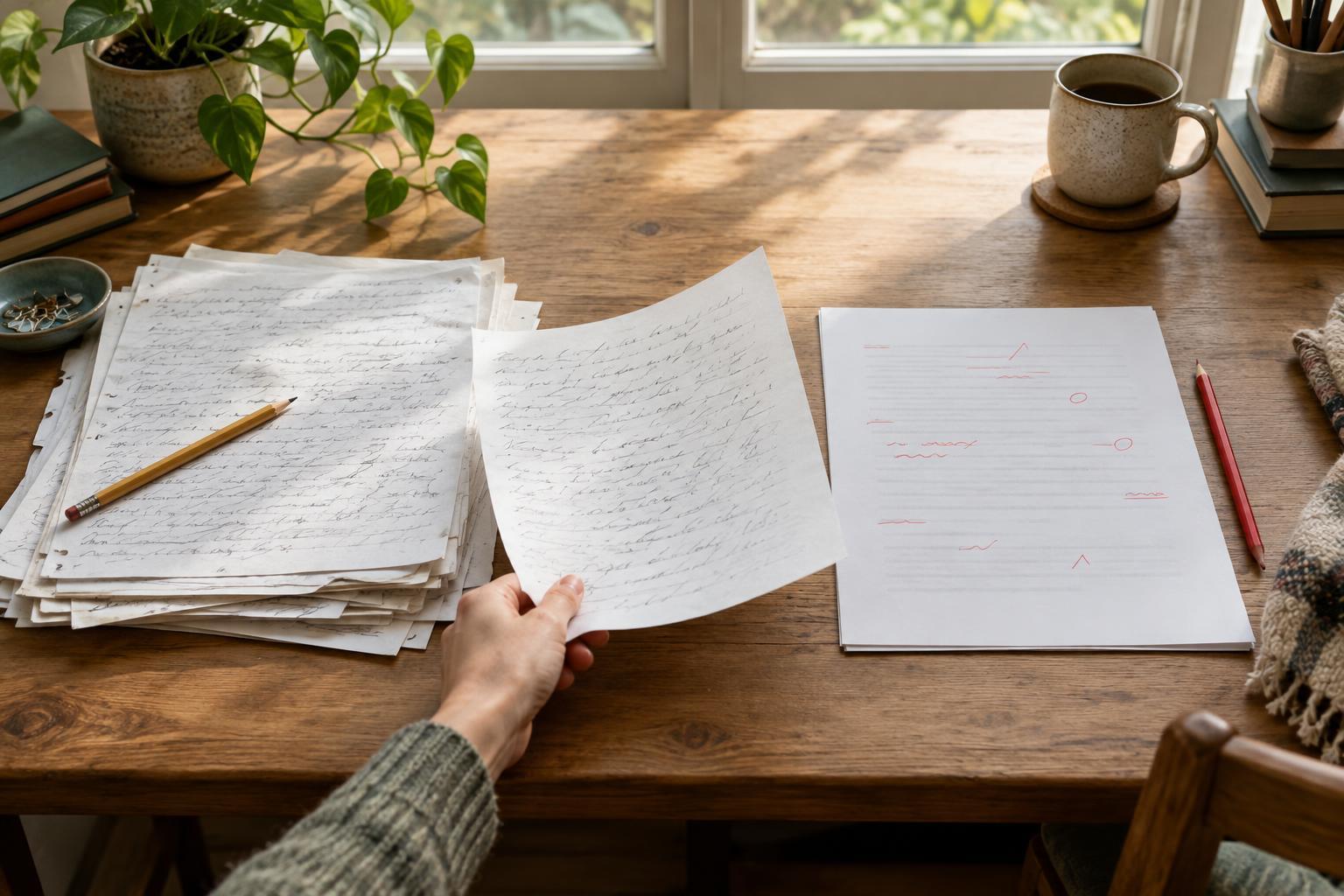
Treat the first few minutes as an entry period rather than a demand for your best work. The purpose is to make contact with the project: read the last paragraph, look at yesterday’s sketch, or listen to the unfinished recording. A modest first action gives you something concrete to respond to. You might gain momentum, or you might simply learn what the work needs next. Either outcome can make the session useful.
Choose one small, visible task
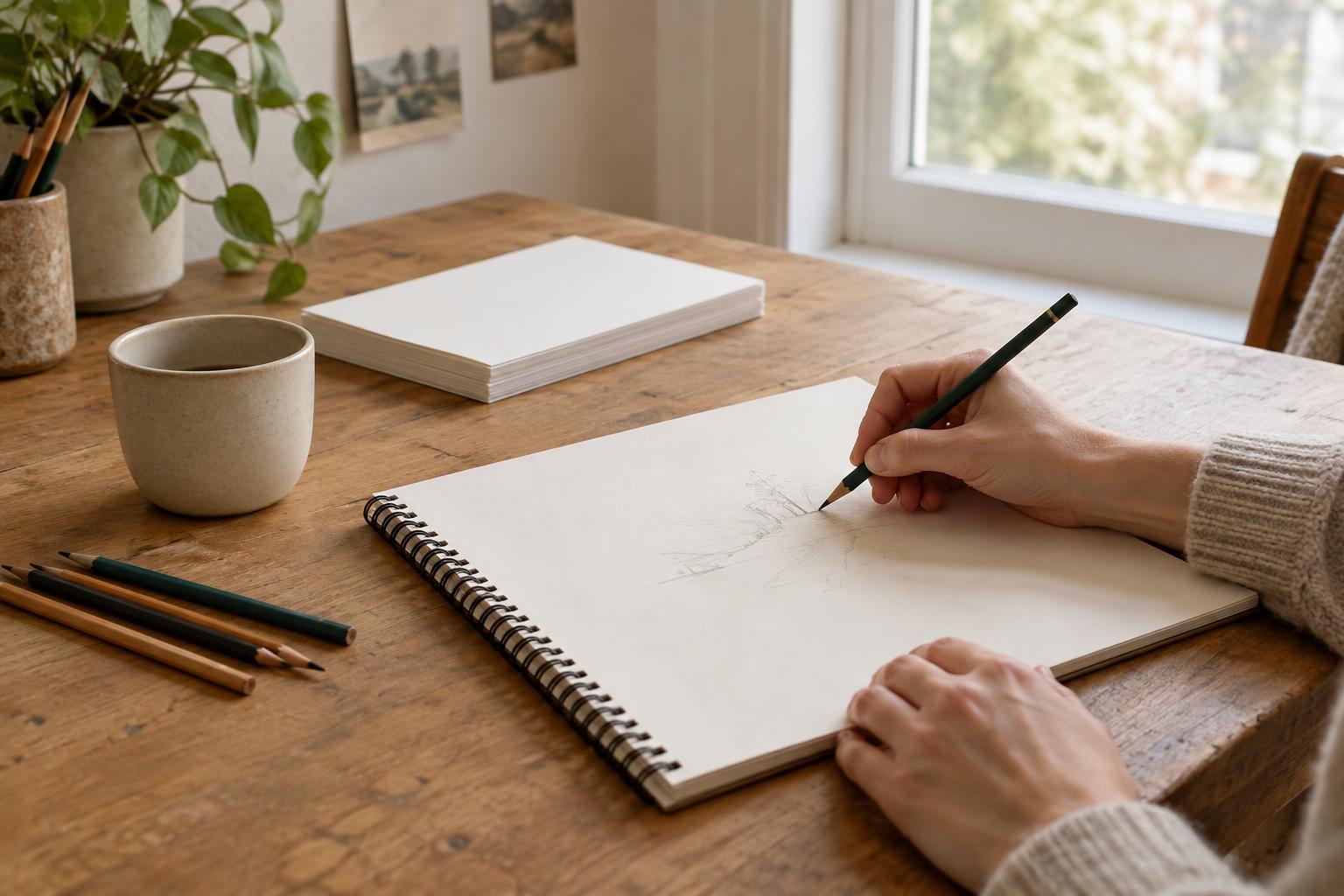
A broad intention such as “work on my story” leaves many decisions to make after you sit down. Before a session, name one action you could recognize as done. You might draft a conversation between two characters, collect five possible titles, make three thumbnail sketches, or rearrange one section of a song. The task does not need to finish the project. It only needs to give you a place to enter.
If choosing feels difficult, pick the smallest task that would help you understand the project better. You could list questions you have not answered, mark the part that feels awkward, or make a rough version of one element. Keep the task within the materials and time you have today. A short session at a kitchen table calls for a different starting point than an uninterrupted afternoon.
Use a brief opening ritual
A ritual can reduce the number of decisions between arriving and beginning. Keep it simple enough to repeat: put your phone out of reach, open the relevant file or notebook, write the date, and set a timer for a manageable first block. If a timer feels distracting, use another clear boundary, such as working through one page or one sketch. The ritual is a cue to begin, not another project to perfect.
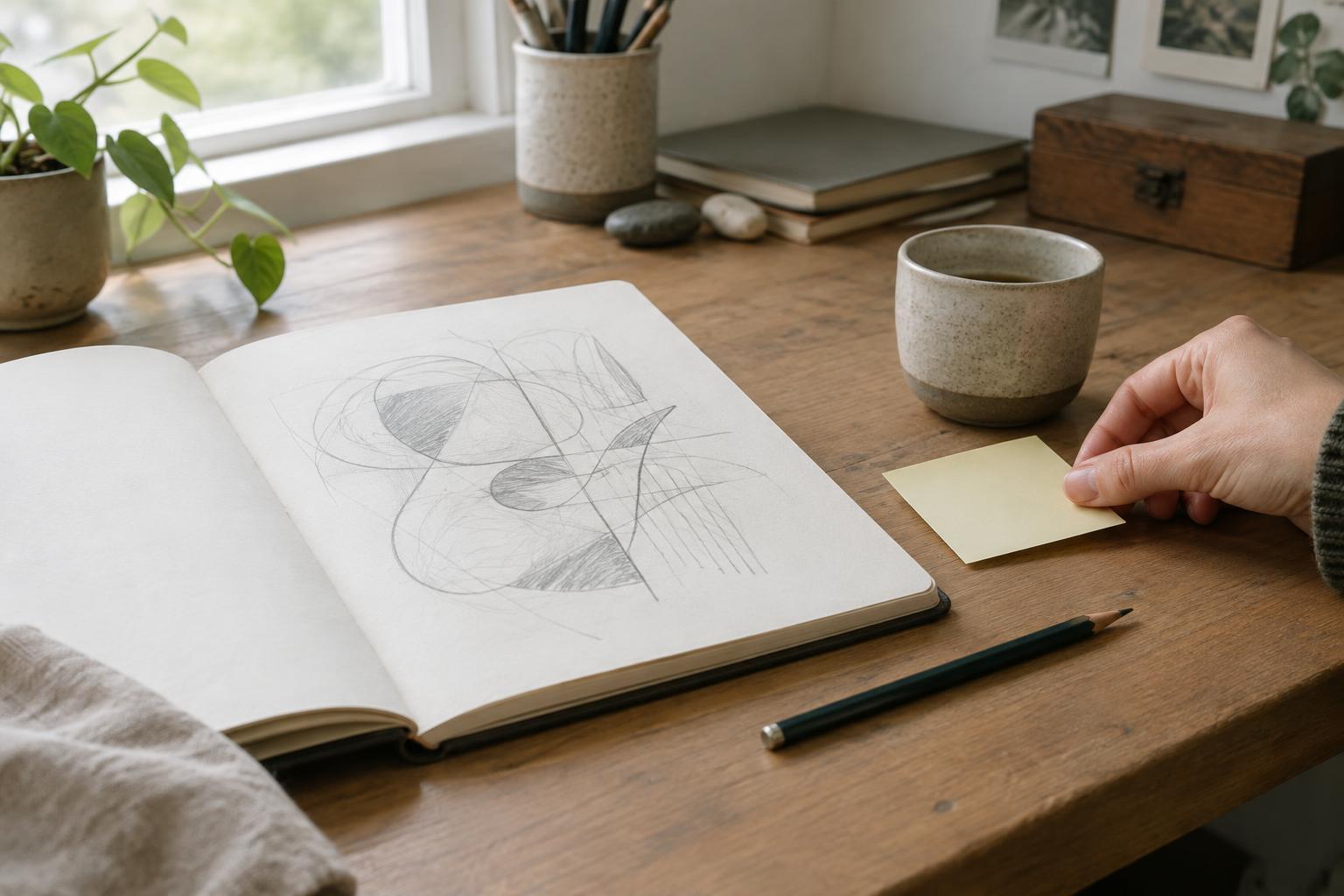
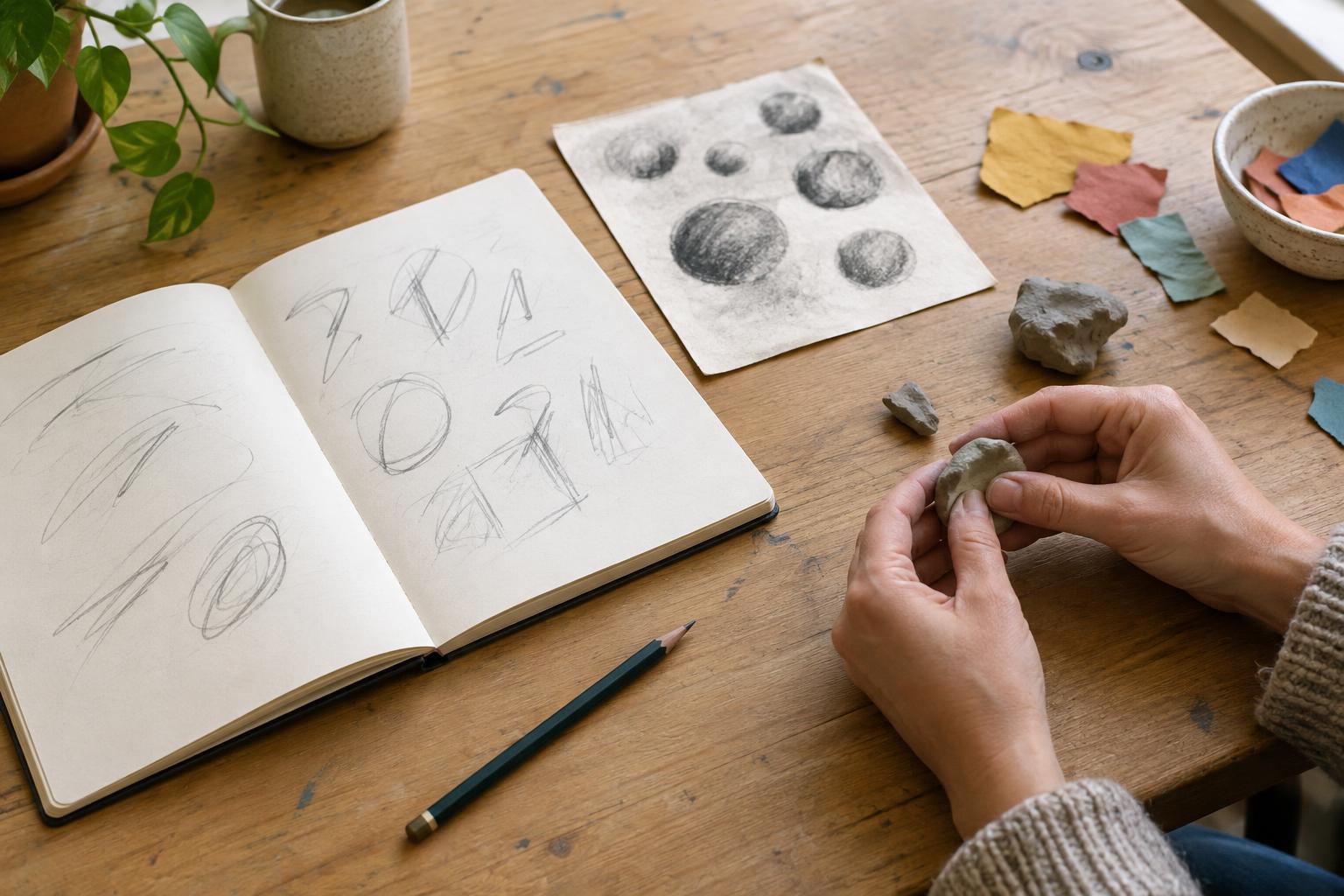
Next, give yourself an intentionally rough prompt. A writer might start with “What I’m trying to say is…” and continue without editing. A visual artist might draw several quick shapes before choosing one to develop. A designer might list obvious solutions, including ones that seem too simple. These moves lower the stakes of the first mark. You can revise, discard, or build on the results later.
Try to keep reference gathering separate from this opening block unless the task specifically requires it. Looking up one needed detail is different from searching for examples until you feel ready. If you notice yourself drifting into preparation, write down what you are looking for and return to the next action you chose.
Decide what to do when you get stuck
Getting stuck does not have to end the session. Make a short menu of fallback moves before you need it. You could describe the problem in plain language, make a deliberately imperfect version, switch to a smaller piece, or compare two possible directions. For example, if a scene will not come together, write what each character wants from it. If a layout feels wrong, move only one element and observe what changes.
It also helps to distinguish a difficult task from a depleted day. If you are circling the same decision, a brief break may give you room to return with a clearer view. If you have limited energy, a maintenance task—organizing materials, labeling drafts, or noting questions—may be enough. A creative routine should make room for rest, not turn every pause into a failure.
Leave a doorway for next time
Before you stop, spend a minute recording where you are. Write one or two sentences about what you made, what remains uncertain, and the first action to take next time. “Open the draft and rewrite the transition between these two sections” is easier to approach than “keep writing.” Save files where you can find them and leave relevant materials together when possible.
After a few sessions, notice which starting actions you are willing to repeat. You may prefer a quiet five-minute warm-up, or you may do better by opening the project and making an immediate change. Adjust the routine to fit your work and circumstances. Inspiration can be welcome when it appears, but it does not have to be the condition for showing up.