Make the break small enough to take
It is easy to treat lunch as time you can borrow from whenever work runs long. You may intend to leave your desk, then answer one more message and end up eating beside your keyboard. Rather than waiting for a perfectly clear afternoon, decide what a workable break looks like on an ordinary day. It might be a full lunch hour, or it might be twenty minutes with your work screen out of sight.
Choose a time that fits the shape of your day, and put it on your calendar if that helps you protect it. Include a few minutes to stop working and move to where you will eat. The goal is not to make every lunch identical. It is to give the break a place in your day before other tasks claim the space.
Create a clear stopping point
The hardest part of leaving your desk may be deciding where to pause. A few minutes before lunch, write down the next concrete action for your current task: the paragraph to revise, the file to open or the question to answer. If something genuinely needs attention later, add it to a trusted task list instead of keeping it in your head.
Then close or minimize the work in front of you and set an appropriate status message if colleagues might expect a quick reply. A simple note that you are at lunch and when you expect to return is usually more useful than a long explanation. If your role requires coverage, agree on that arrangement with your team ahead of time; a break is easier to take when nobody has to guess who is available.
Pick a place that feels separate from work
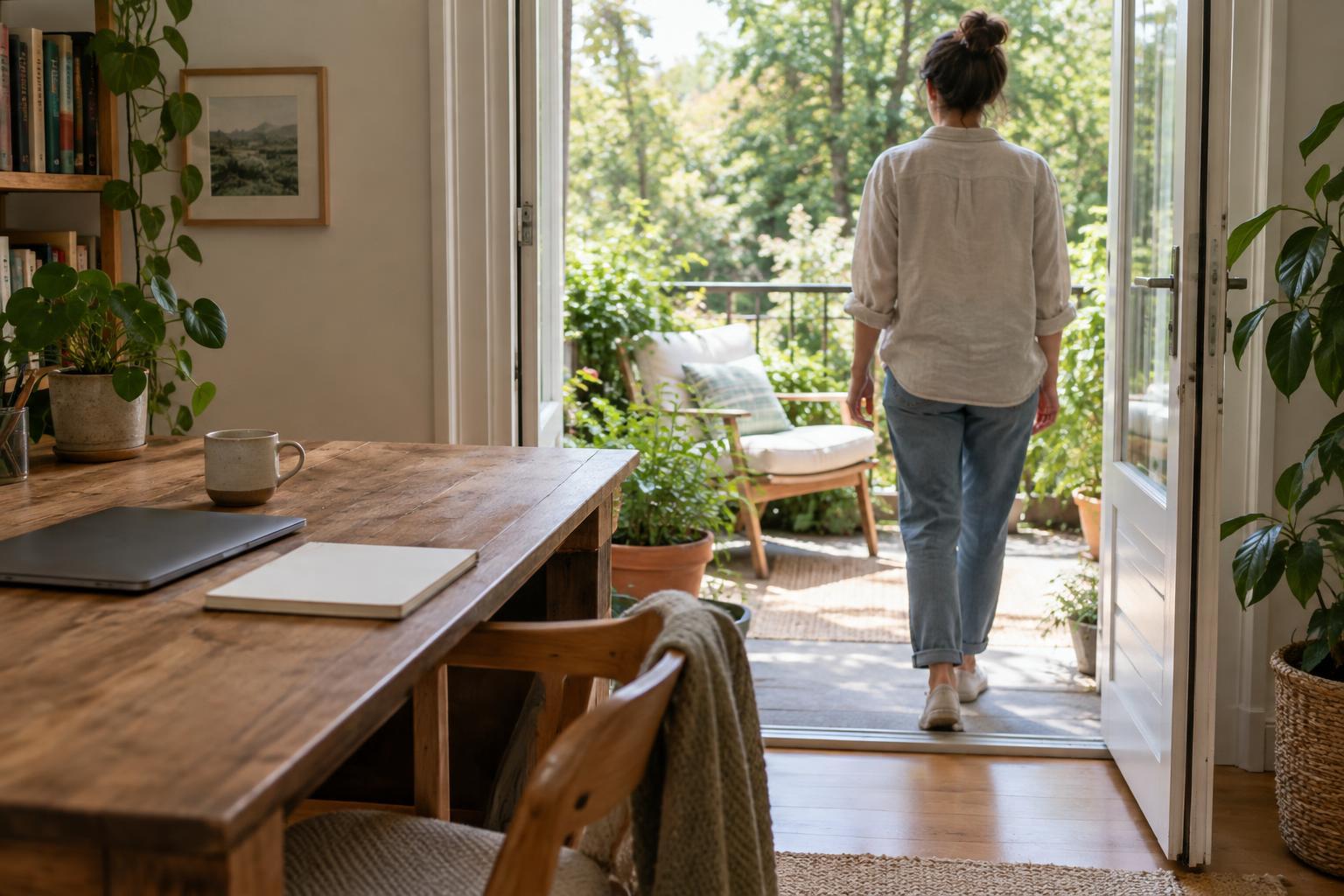
Getting away from your desk does not require a café or a scenic walk. A kitchen table, shared break room, bench or another spot in your home can be enough. If you cannot move far, try changing seats or turning away from your work setup. Choose a place that is practical for your schedule and comfortable for you, rather than one that looks like an ideal break.
Make the move easier by deciding what you will eat before you are already hungry and pressed for time. That could mean bringing lunch, keeping a simple option on hand or knowing where you can buy something nearby. Preparation is useful only if it reduces friction. You do not need a complicated meal plan to justify stepping away.
Let lunch be something other than a work session
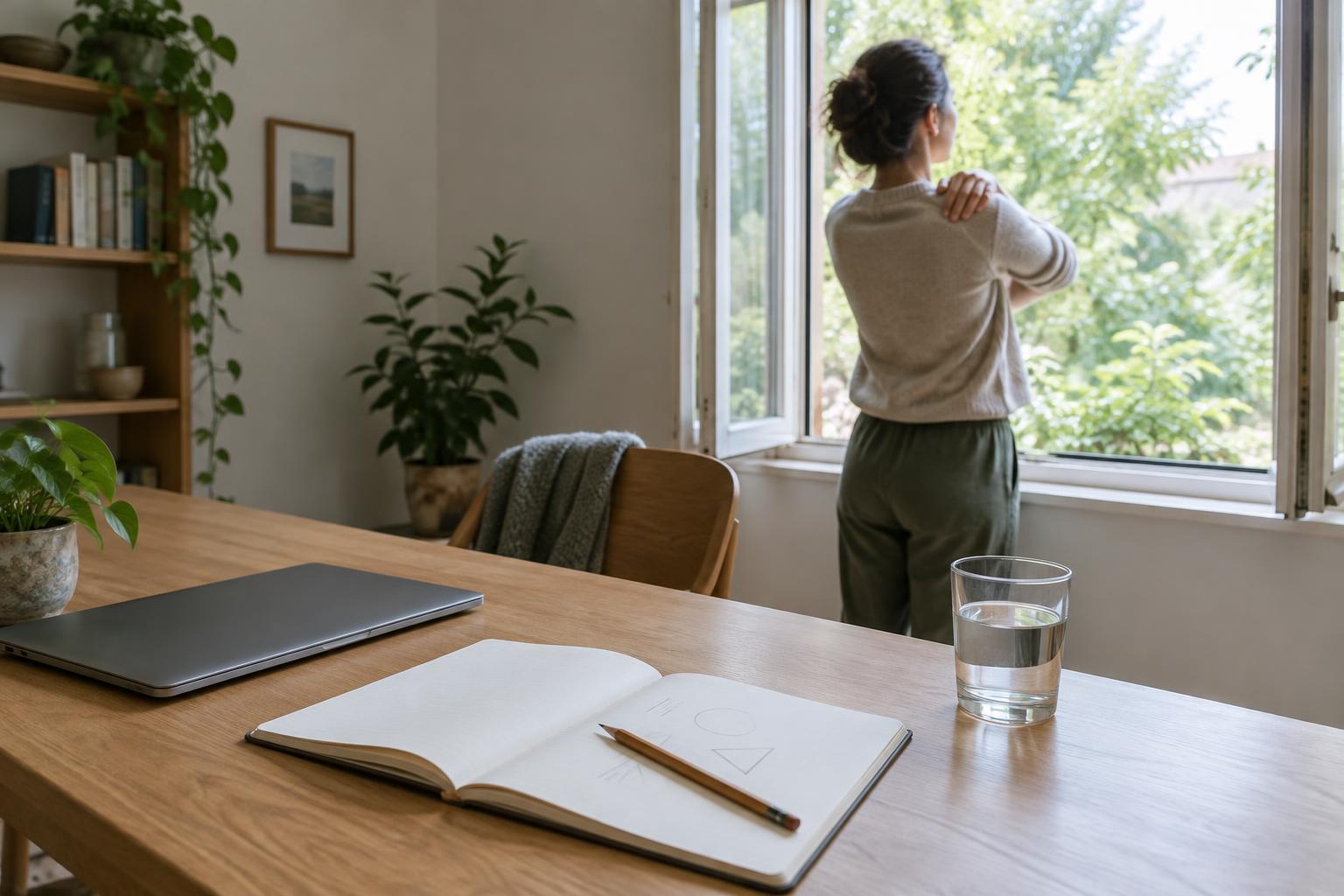
You do not have to fill the break with a special activity. Eating, chatting, looking out a window or taking a short walk are all reasonable ways to spend it. If you prefer to read or listen to something, consider choosing material unrelated to the task waiting on your desk. The point is to have some time that is not simply another form of work.
It can help to decide in advance how you will handle your phone. Perhaps you leave work notifications muted but remain reachable through an agreed channel for urgent matters. Perhaps you put the phone away altogether. Either approach can work; what matters is making a deliberate choice instead of letting every alert decide how your lunch goes.
Plan for imperfect days and an easy return
Some days, a meeting runs over or a deadline changes the plan. If you miss your usual lunch time, look for another opening rather than declaring the whole break lost. A shorter pause away from the desk may still be worthwhile. You can also notice recurring obstacles: if one meeting regularly consumes lunch, could it be moved, shortened or followed by a protected break?
When you return, use the note you left yourself to restart. Give yourself a moment to open the right document and choose the first action, rather than expecting instant momentum. Taking lunch away from your desk is a routine you can adjust, not a test of discipline. The more realistic it is about your workday, the easier it becomes to repeat.