Decide what counts as the end of work
When home is also your workplace, there may be no commute to mark the shift from one part of the day to another. Work can stretch into the evening because a task is unfinished, a message arrives, or the laptop is still within reach. Start by choosing a usual stopping point. It does not have to be the same time every day, but it should be specific enough that you can recognize when you have reached it.
Plan that stopping point alongside your actual responsibilities. If your schedule changes because of caregiving, meetings, or shared space, you might set a work window for each day rather than one fixed weekly rule. Decide in advance what would justify working later and what can wait. An urgent request may need attention; an idea you just remembered can usually go on tomorrow’s list. This distinction makes the boundary more useful than a vague promise to “switch off.”
Create a short shutdown routine
A shutdown routine gives your workday a deliberate ending. Spend a few minutes recording unfinished tasks, noting the next action for each important one, and checking tomorrow’s calendar. Then close work tabs, put away papers, and turn off work notifications where your role allows. The aim is not to finish everything. It is to leave yourself a clear place to begin again.
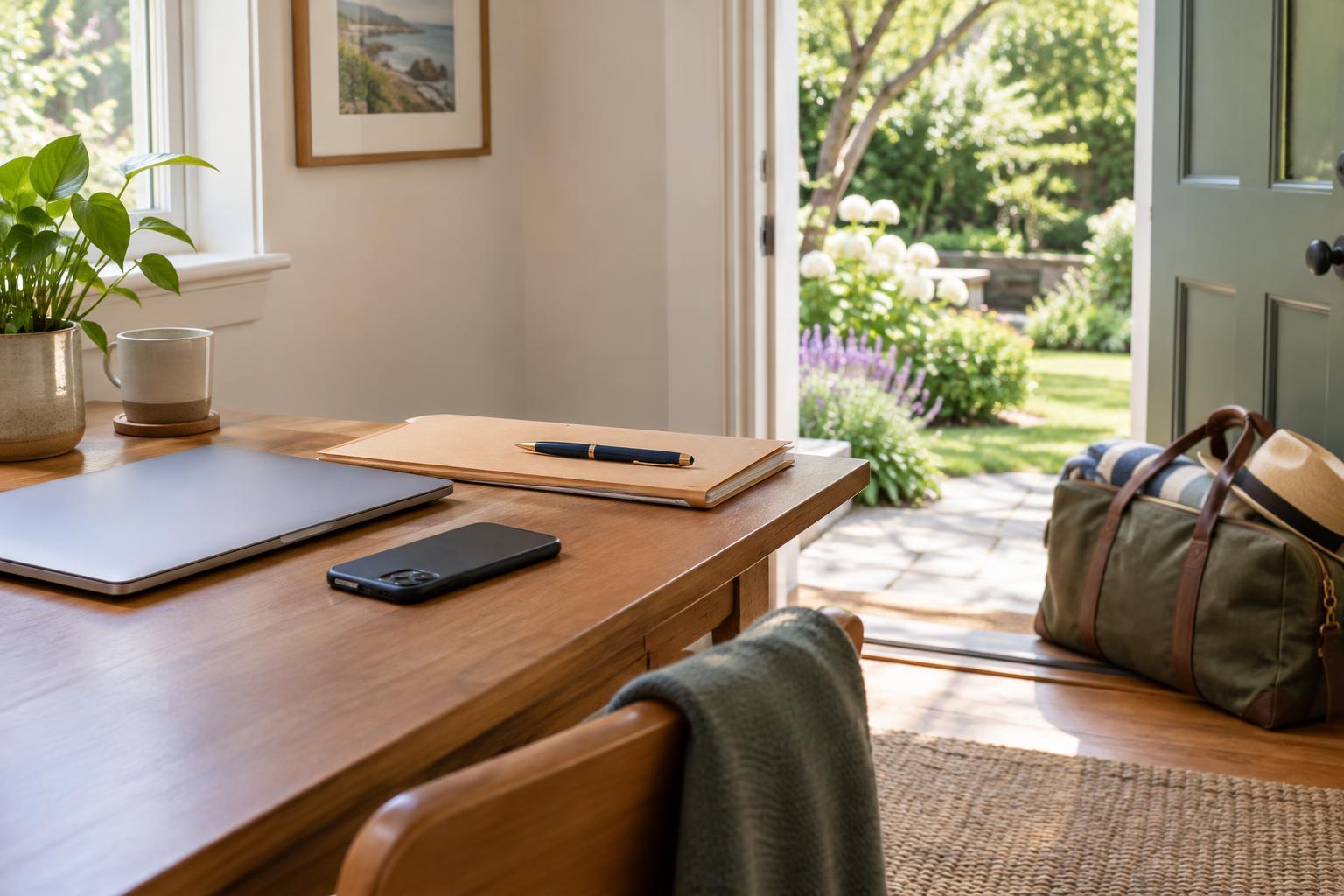
Keep the routine small enough to repeat on a busy day. If you often work at the kitchen table, clearing that surface may be the most meaningful final step. If your equipment stays out, closing the laptop and moving it off the table can still provide a visible signal. A brief walk, a change of clothes, or making dinner can serve as a transition into personal time. Choose something that fits your home rather than trying to imitate an office commute.
Make boundaries visible to other people
The people you work with cannot always tell when you have stopped for the day. Share your usual availability, use calendar blocks when helpful, and say when someone can expect a reply. If your team handles time-sensitive work, agree on which channel is for genuine urgency. That makes it easier to leave routine messages until your next work period without repeatedly checking every inbox.
People at home may need a different kind of signal. A closed door, headphones, or a note on the table can mean “I am working until this time,” while putting those items away can mean “I am available again.” These cues work best when paired with a conversation about interruptions and shared needs. Boundaries are not a demand for perfect quiet; they are a way to make expectations clearer for everyone using the space.
Reduce the chances of work following you
Digital access can make work feel permanently open. If possible, separate work and personal browser profiles, accounts, or devices. Put work apps somewhere less prominent on your phone, and adjust notifications so that ordinary updates do not appear during personal time. You can still check for something important when needed; the goal is to make checking a choice rather than a reflex.
Physical space matters too, even without a dedicated room. A tray for work materials or a particular corner of a table can help you contain work at the end of the day. Avoid turning every place you rest into a place you routinely answer email, if your circumstances permit. When space is limited, a repeatable setup and pack-away habit may be more realistic than trying to keep work and home in completely separate areas.
Adjust the boundary when it does not hold
A boundary that regularly breaks is worth examining, not treating as a personal failure. Notice what pulls you back into work: unclear priorities, late meetings, a fear of missing messages, or tasks that take longer than planned. Each calls for a different response. You might leave more room in your schedule, ask for clearer deadlines, or agree with colleagues on how after-hours requests should be handled.
Personal time does not have to be carefully planned to count. It can include chores, family responsibilities, hobbies, or simply doing nothing work-related. If you sometimes need an unusual work session, choose when it will happen and when you will stop, rather than letting it quietly consume the evening. The most sustainable boundary is one you can explain, practice, and revise as your work and home life change.