Define the outcome before listing the steps
A task such as “prepare a presentation” can feel difficult to start because it contains many decisions. Before making a checklist, write one or two sentences describing what you are trying to produce. For example: “Create a short presentation that explains the proposal and gives the team enough information to discuss it.” This gives the work a direction without requiring you to solve every detail at once.
Next, describe a reasonable finish line. Ask what must be present for the task to be usable, and what would merely be nice to add. A presentation might need a clear recommendation, supporting points and a final review. Custom illustrations might be optional. Separating essentials from extras helps prevent the project from expanding each time you sit down to work.
If the outcome is still vague, identify who will use the result and what they need to do with it. You may not know every requirement yet, but you can write down the open questions. “Confirm the audience” is a workable step; “figure everything out” is not.
Make a rough map of the work
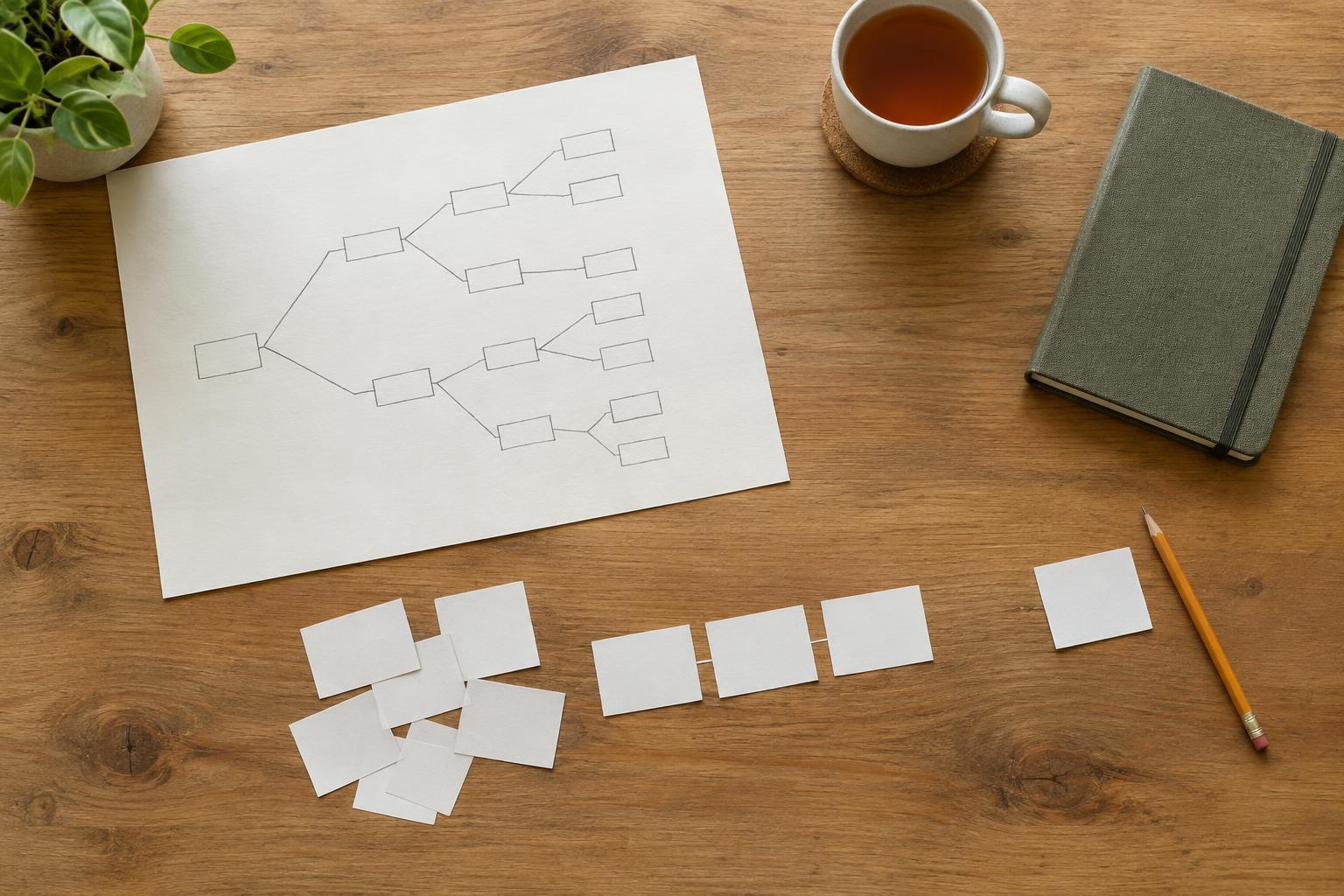
List the major parts of the task without worrying about their exact order. For a presentation, that map might include gathering material, selecting a main point, drafting an outline, making slides and reviewing them. Treat this as a sketch, not a contract. Its purpose is to move the work out of your head so you can see it.
Then look for dependencies. You may need to choose a main point before writing slides, but you might be able to collect examples while waiting for feedback on the outline. Mark anything that requires another person, a missing file or a decision you cannot make yet. This keeps a blocked item from making the whole project appear blocked.
Avoid turning the map into a detailed plan for every future hour. Complex work often reveals new steps as you go. A useful map shows enough structure to guide the next session and leaves room to change course.
Turn each part into a visible action
A good next step names something you can do and recognize as complete. “Work on research” is broad; “read the three documents already collected and note one useful point from each” is clearer. Start steps with a verb such as list, compare, draft, sort, ask or review. If a step still makes you pause to decide where to begin, break it down once more.
Choose a size that fits a focused work session. This does not mean every action must be tiny. Drafting a rough outline may be a useful step if you know the topic well. If it feels too large, begin with “write the three questions the outline must answer.” The right size is the one that lets you start with the time, energy and information you have.
Keep planning separate from polishing. “Draft the opening slide” and “revise the opening slide” are different actions. Combining them can lead you to edit the first sentence repeatedly before the rest exists. A rough version gives you something concrete to improve later.
Set up one session around one step
At the start of a work session, pick one action from your list and put the materials it needs within reach. Close unrelated tabs, silence nonessential notifications if you can, and write the chosen action where you can see it. These small preparations reduce the number of decisions competing with the task.
Give the session a practical stopping point: a completed action, a rough draft or a note explaining what remains. If you notice another task, capture it on a separate list rather than switching immediately. If you get stuck, name the obstacle precisely. “I need an example for the second point” suggests a next action; “this is going badly” does not.
When your available time is short, choose a step that can leave behind a useful artifact, such as a question list or annotated outline. Even if you cannot finish the larger project, that artifact can make it easier to resume.
Update the steps as you learn
After a session, take a moment to mark what is done and write the next visible action. If a step took longer than expected, that is information about the work, not a reason to keep following a plan that no longer fits. Split the remaining work, change the order or remove an optional element.
Revisit the finish line when new requirements appear, especially if you are working with others. Clarify who owns a decision and when you need their input. You can continue with independent steps while waiting, but leave enough room to incorporate a response.
Breaking down a complex task is not about predicting every move. It is a way to give yourself a clear place to begin, a manageable place to stop and a simple way to pick up the work again.